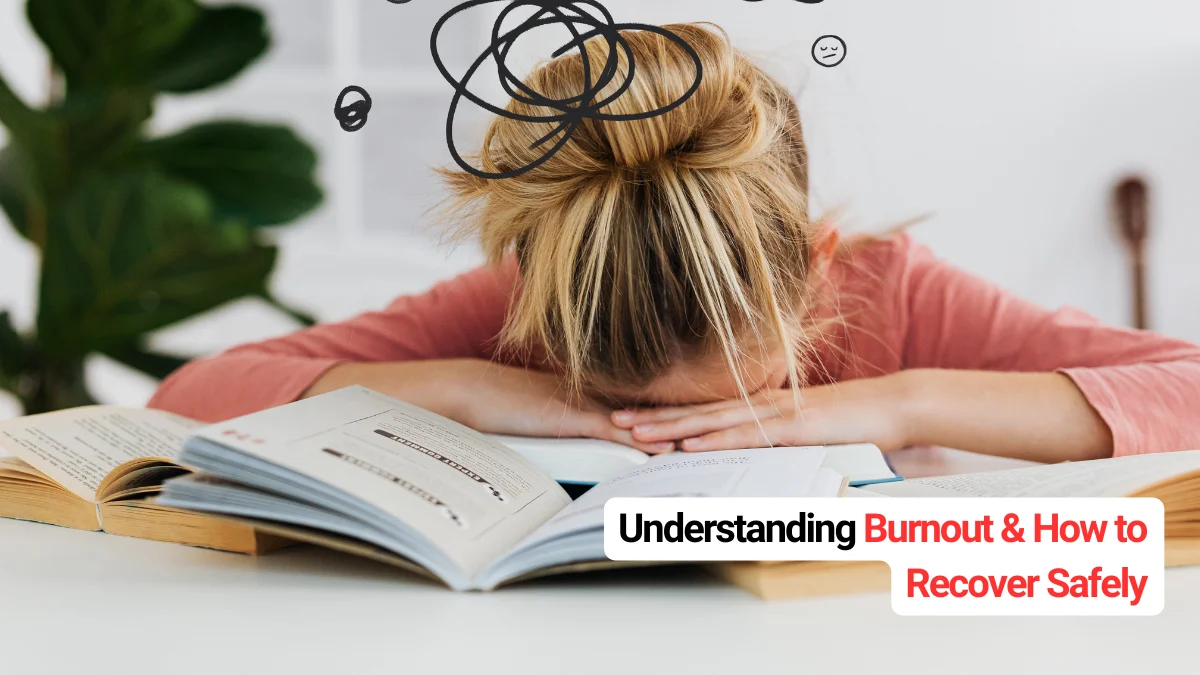
Burnout has become a common issue across all age groups, yet many people do not notice it at first. They only feel tired, disconnected, or unlike themselves. When the mind feels heavy and the body stays drained even after rest, burnout may be the underlying reason. The positive part is that safe recovery is possible with a steady and simple approach.
Key Takeaways On Understanding Burnout & How to Recover Safely
- Burnout is long-term emotional and physical exhaustion
- It develops slowly and often goes unnoticed
- Clear signs appear in thoughts, behaviour, and energy levels
- Recovery needs rest, boundaries, and small daily habits
- Support systems improve the speed of recovery

What Exactly Is Burnout
Burnout is not regular stress. It is a deeper state where the mind, body, and emotions feel exhausted for weeks or months, not just a single difficult day. It develops when responsibilities increase beyond your control or when rest becomes limited. It may also appear when you feel stuck, unsupported, or pressured for a long time.
Burnout is not limited to the workplace. It can arise from parenting, caregiving, studies, relationships, or continuous personal responsibilities.
Common Signs You May Be Burned Out
Burnout builds slowly. In the early phase, people think it is normal stress. Over time, the symptoms become stronger.
Physical Signs
- Constant tiredness
- Headaches or stomach discomfort
- Poor sleep patterns
- Falling sick more often
Emotional Signs
- Feeling empty or hopeless
- Losing interest in daily work or hobbies
- Easy irritation
- Thoughts like “nothing matters”
Behavioural Signs
- Avoiding tasks
- Withdrawing from people
- Delaying simple work
- Using food or screens to escape
These patterns are signs of burnout. They are not signs of weakness or lack of discipline.
Burnout vs Stress
Stress means there is too much happening at once. Burnout means the inner resources are no longer enough. People under stress still feel they can move forward. People with burnout feel they cannot continue. This difference is important for understanding the right recovery steps.
Why Burnout Happens
Several factors contribute to burnout.
Work Related
- No support or appreciation
- Disorganised or chaotic environment
- Excess work and limited time
- No control over tasks
Lifestyle Factors
- Lack of rest
- No hobbies or downtime
- Heavy responsibilities
- Weak support system
Personality Factors
- High perfectionism
- Difficulty saying no
- Self pressure
- Fear of disappointing others
Finding the source helps you choose the right recovery path.
How to Recover From Burnout Safely
Burnout recovery takes time. It does not improve overnight. Small actions, done consistently, slowly rebuild your energy.
1. Admit You Are Burned Out
This is the most important step. Burnout continues when you ignore it. Ask yourself simple questions.
What is draining my energy. Which situations feel overwhelming. Do I need help. Being honest with yourself is the first stage of healing.
2. Create Distance From the Stress Source
You may not be able to pause all responsibilities, but distance can be created in small ways.
Take a day off when possible. Request support for a task. Reduce your work load slightly. Limit screen time. Take short breaks during long hours. Even small pauses help the mind recover.
3. Refill Your Energy
Focus on small activities that restore your energy.
Sleep a little more. Go for a short walk. Cook a simple meal. Meet a close friend. Read something light. Listen to music. These are not rewards. These actions help your system reset.
4. Reevaluate Your Goals
Burnout often signals an imbalance in life. Ask what you want at this stage. Identify tasks that drain your strength. Note the activities that make you feel energised. A small change such as reducing a commitment or asking for help can create a visible difference.
5. Set Clear Boundaries
Constant giving leads to burnout. Setting limits protects your energy. Examples include:
I cannot work after a set time.
I need a short period of quiet daily.
I cannot take extra duties this week.
People who value you will respect your boundaries.
6. Talk to Someone You Trust
Speaking to someone reduces the emotional weight. It may be a friend, a family member, a colleague, or a counsellor. You do not need solutions. You only need someone who listens.
7. Add Small Daily Habits
Start with simple habits and increase them slowly.
| Habit | Why It Helps |
|---|---|
| 10-minute walk | Reduces stress quickly |
| Deep breathing | Calms the nervous system |
| Journaling | Clears mental overload |
| Healthy meals | Supports steady energy |
| Early sleep | Restores the brain |
| Micro breaks | Prevents daily fatigue |
These small habits guide the recovery journey.
How Long Does Recovery Take
Recovery time is different for every person. Some feel better in a few weeks, while others may need a longer period. Recovery depends on the level of burnout, the duration of symptoms, your support system, your lifestyle, and your ability to set boundaries. Burnout is not a failure. It is a sign that your system needs attention.
Final Thoughts
Reaching this stage means you are already taking steps toward better mental health. Burnout does not mean you lack strength. It means you have been strong for too long without enough rest. With small habits, support, and patience, recovery becomes possible. When you feel overwhelmed, take a pause and remind yourself: you deserve rest, balance, and recovery.