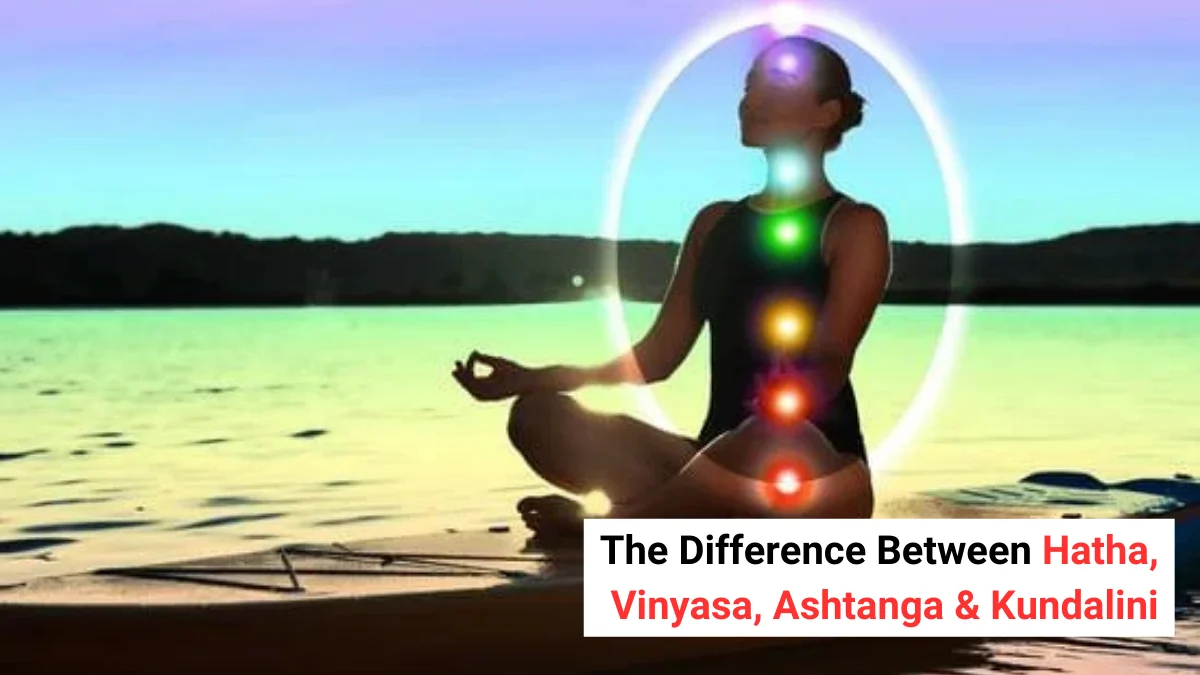
Many people step into a yoga studio and feel confused about which class to enter. These four styles come from the same base but each one creates a very different experience on the mat. This guide will help you understand what each style offers so you can choose the one that fits your goals and comfort level.
Key Takeaways On Hatha, Vinyasa, Ashtanga & Kundalini
- Hatha is slow and steady, best for learning basics
- Vinyasa uses breath linked with movement
- Ashtanga follows a fixed and disciplined sequence
- Kundalini focuses on breath, chant and inner energy
- Choose based on the pace, structure and depth you want
Quick Overview in One Line
Hatha: Slow and basic.
Vinyasa: Flow and movement.
Ashtanga: Strong and structured.
Kundalini: Breath and energy based.
| Style | Pace | Focus | Typical Class Feels Like | Best For |
|---|---|---|---|---|
| Hatha | Slow | Alignment, breath, basics | Holding poses, gentle pacing | Beginners, recovery, calming practice |
| Vinyasa | Medium fast | Breath plus movement flow | Smooth transitions, cardio vibe | Those who want variety and sweat |
| Ashtanga | Fast and structured | Strength, endurance, discipline | Same set series, intense practice | People who like routine and progress |
| Kundalini | Variable | Energy, breath, mantra | Kriyas, chanting, meditation | Spiritual seekers, inner work |
Hatha: The Gentle Foundation
Hatha is the starting point for many people. The practice focuses on posture and breath in a slow and steady way. You hold poses for a longer time which helps you understand alignment. It also gives you space to notice how each muscle reacts and where your body needs support.
What You Get
- Better posture and flexibility
- A safe pace that supports beginners and people recovering from injuries
- A basic start to breathwork and meditation
Try Hatha if you want to learn the basics and move at a slower and more mindful pace.

Vinyasa: The Flow Based Workout
Vinyasa connects movement with breath. Instead of staying in one pose for long, you move through a smooth sequence. Classes change from teacher to teacher which makes the experience fresh each time. The flow builds heat and gives the session a workout feel.
What You Get
- A session that boosts heart rate and builds stamina
- Creative sequences that keep you engaged
- Better coordination through continuous movement
Try Vinyasa if you like variety, rhythm and a class that feels active.
Ashtanga: The Disciplined Ladder
Ashtanga uses a fixed series that you repeat in the same order. This structure helps you track progress clearly. The practice is strong and demands focus which builds discipline over time. Many teachers follow the Mysore method where you move at your own pace but still receive guidance.
What You Get
- A stable structure that shows progress
- A demanding practice that builds strength and flexibility
- A routine that sharpens discipline
Try Ashtanga if you enjoy a set pattern and want a strong physical challenge.
Kundalini: The Inner Energy Practice
Kundalini shifts attention from physical form to energy movement. Classes use breath techniques, repeated movements, mantra chanting and meditation. These combine to guide inner awareness and emotional release. Many people find this practice more spiritual compared to other styles.
What You Get
- A focus on breath, sound and inner feeling
- A practice that can shift emotional and mental state
- A deeper sense of inner connection
Try Kundalini if you want meditation, breathwork and inner energy based practices.
How to Choose
- If you want calm and basics, choose Hatha
- If you want flow and sweat, choose Vinyasa
- If you want structure and progress, choose Ashtanga
- If you want inner focus, choose Kundalini
Your choice can also change over time. Trying one class of each style helps you understand what your body and mind respond to.
Beginners Listicle: Three Steps to Start
- Begin with Hatha or a beginner level Vinyasa class to learn main postures and breath control
- Share any injuries with the teacher so you get the right guidance
- Stay open to new styles as your comfort and needs may change
Yoga has many paths but the goal stays the same. It brings more calm, more strength and more clarity. Pick the style that feels right and explore the others whenever you want to grow your practice further.