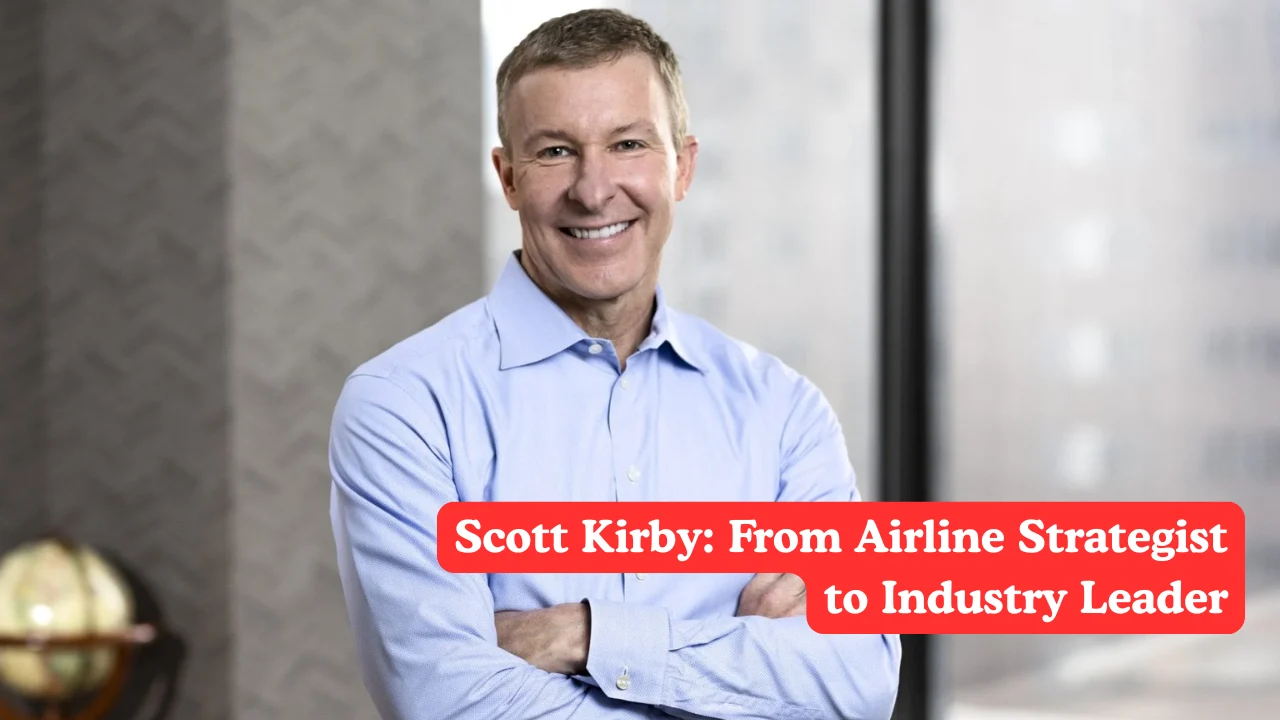
Scott Kirby stands out as one of the most influential executives in the aviation world. With a career stretching more than three decades, he has held leadership roles at several major U.S. carriers and now guides one of the largest airlines in the world. His journey reflects both sharp strategic thinking and operational discipline.
He entered the industry during a period of rapid transformation, moving through roles that required deep analysis and bold decisions. Today his approach balances growth, technology and operational reliability traits that mark his leadership style.
Key Takeaways On Scott Kirby
- Kirby has served as President of major carriers and is now the CEO of a top airline.
- His education in computer science and operations research underpins a data-driven leadership style.
- He emphasizes network planning, cost control and customer experience as core pillars.
- His influence extends beyond one airline to shaping broader industry trends.

Early Life and Education
Scott Kirby was born in August 1967 and raised in Texas. He attended the U.S. Air Force Academy and earned a bachelor’s degree in computer science and operations research. He then took a master’s degree in operations research from George Washington University.
His academic background laid the foundation for his analytical style. Before entering airlines, he worked in defense budgeting and systems analysis. That early exposure to complex organisational systems prepared him well for the airline business.
Career Progression
Kirby began his airline career at America West Airlines around 1995, working in scheduling and network planning roles. He steadily rose through the ranks. When America West merged with US Airways, he took on leadership roles at US Airways including President of Planning.
In 2013 he became President of American Airlines after the merger with US Airways. He oversaw operations and revenue management, helping steer the combined carrier through major change. After that, he joined United Airlines as President in 2016 and was appointed CEO in 2020.

Leadership Style and Strategic Focus
Kirby is known for a hands-on, data-centric leadership style. He emphasises network optimisation, cost structure improvement and reliability. Under his watch, the airline has pursued large aircraft orders and invested in cabin upgrades and connectivity.
He also focuses on labour relations, operational reliability and customer experience. He believes airlines must balance growth with stable operations rather than over-extend. His approach avoids flashy promises; instead it stresses measurable outcomes and continuous improvement.
Industry Impact and Vision
Kirby has shaped not just his airline, but the broader industry narrative. He argues that only a few carriers will lead the full-service segment globally, while others will compete on narrower dimensions. He drives the idea that brand loyalty, network strength and operational consistency will define success.
Under his leadership, the airline has also emphasised sustainability, modernisation and pilot development. These moves reflect a longer-term vision of aviation beyond just quarterly results.
Challenges and Opportunities
The airline industry remains volatile, subject to fuel price swings, regulatory change and unexpected disruptions. Kirby’s role involves balancing growth with risk. He must manage rising costs, labour negotiations and global competition. The pandemic highlighted how quickly structural plans can be challenged.
At the same time, opportunities exist in fleet renewal, international expansion and changing customer expectations. If Kirby can lead his airline through these shifts with discipline, he may reinforce his reputation as a transformative leader.
What It Means for the Future
Scott Kirby’s journey from airline planner to CEO demonstrates how deep operational experience can be a foundation for leading major organisations. His combination of analytics, experience and strategic clarity gives him a unique profile. As the airline industry evolves, leaders like Kirby will shape how carriers compete, invest and present themselves to customers.
For his airline, the focus remains on making travel more reliable, cost-effective and aligned with changing demand. For the industry, his impact echoes in how network carriers define their role amid low-cost, regional and global competition.