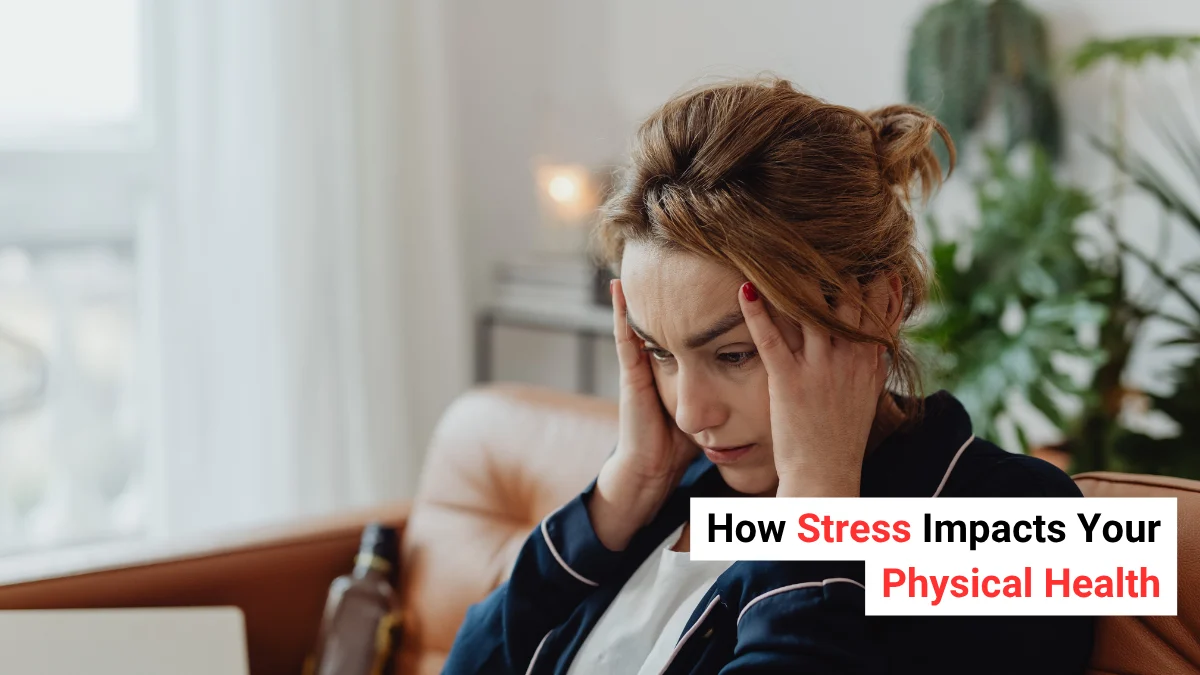
Many people wake up tired and think they simply need more sleep. The shoulders feel tight, and even a strong cup of coffee does not make much difference. Most call it a normal day. But the real reason is often hidden. Your body might be under stress for so long that you stop noticing the signs. The damage builds slowly and affects major body systems even when you think you are doing fine.
Key Takeaways On Impact Of Stress On Physical Health
- Long stress quietly raises blood pressure and increases heart problems
- The gut reacts fast to stress and shows early signs
- The immune system becomes weaker when stress stays for months
- Muscle tension becomes permanent and causes daily pain
- Stress changes hormones in both men and women
- Memory, focus, and mood decline with long exposure to stress
- Small daily habits can reverse many effects in weeks

Your Heart Is Working Hard Even When You Sit Still
When stress rises, the body releases cortisol and adrenaline. These hormones push the heart to beat faster and make blood pressure rise. This response is normal when you face sudden danger. But today the trigger is not danger. It is nonstop emails, deadlines, money pressure, and family issues. So the heart stays in a state that it should not stay in for long.
This leads to several internal changes:
- Blood vessels stay tight
- Blood pressure remains high
- The risk of heart disease increases quietly
A major study from 2024 showed that people with high-stress jobs had up to a 50 percent higher chance of heart problems even when they maintained a good diet and regular exercise. The heart keeps working harder every day, and the person does not notice it until symptoms start showing.
Your Stomach Takes the First Impact
Stress affects the gut faster than most people expect. The stomach and brain stay connected through a long network of nerves, so any stress signal from the brain reaches the gut within seconds. This is why people feel sudden stomach discomfort before important events.
Common gut reactions include:
- More acid that leads to heartburn
- Slow or fast digestion
- Sudden cravings or loss of appetite
- Existing ulcers becoming more active
Stress alone does not create ulcers, but it increases the pain and discomfort linked to them. Many people do not link these symptoms to stress, but the gut is one of the first areas to react to pressure.
Your Immune System Loses Strength Over Time
Short bursts of stress can strengthen immunity for a short time. But if stress becomes daily, the effect turns negative. The body keeps releasing cortisol for long hours, which reduces the power of immune cells. As a result, the body becomes weak against infections.
Recent observations show that people under long stress:
- Get sick more often
- Take longer to recover
- Face stronger symptoms even with common illnesses
This is why many people say they fall ill after long work pressure or family-related stress. The immune system becomes slow and cannot protect the body like before.
Your Muscles Stay Tight for Hours
Stress tells the muscles to stay in a protective state. This is useful if you have to act fast, but when stress stays for months, the muscles never relax fully. The tightness becomes a daily condition.
The common results include:
- Headaches
- Neck and lower-back pain
- Jaw pain from clenching during sleep
The cycle becomes stronger over time. Pain reduces physical activity. Less activity leads to more stiffness. Stiffness increases stress. The body gets trapped in this loop without noticing when it began.
Stress Changes Your Hormones
Long-term stress affects hormones in both men and women in different ways.
Men often face a drop in testosterone. This leads to low energy, loss of muscle, and reduced drive.
Women notice changes in their cycle. Some experience heavier flow, while others skip periods. Stress can also increase PMS and make symptoms more intense. Hot flashes can become worse in women who are nearing menopause.
Both men and women often gain stubborn belly fat. This happens because cortisol tells the body to store fat around the middle as a quick energy reserve. This fat becomes difficult to lose even with regular exercise.
Your Brain Starts Changing Under Long Stress
Long stress does more than affect mood. It can reduce the size of the part of the brain that handles memory and learning. This area is called the hippocampus. When cortisol stays high for years, memory begins to weaken.
People may notice:
- Forgetting names
- Losing track of things
- Feeling mentally slow
This also increases the chances of anxiety and depression. The brain becomes less sharp and cannot process information the same way.
Short-Term Stress vs Long-Term Stress
| Body Part | Short-Term Stress | Long-Term Stress |
|---|---|---|
| Heart | Faster beat to escape danger | High blood pressure and heart risks |
| Immune System | Temporary boost | Weak immunity and slow recovery |
| Muscles | Tense then relax | Daily tension and pain |
| Gut | Light butterflies | IBS, reflux, constipation or diarrhea |
| Brain | Quick focus | Memory issues and mood problems |
| Hormones | Quick burst | Falls in testosterone and irregular periods |
The Good News: The Body Can Recover Fast
The body starts healing the moment stress levels come down. You do not need long sessions or special plans. Even simple actions can bring strong results in days.
People who begin basic stress-relief habits often see:
- Lower blood pressure within 2 to 4 weeks
- Better sleep in a few days
- Fewer stomach problems
- Reduced headaches
- Stronger immunity in a few weeks
You can begin with small steps such as:
- A ten-minute walk outside
- A few deep breaths when you feel tightness
- Writing three positive points from the day
- Staying away from the phone one hour before sleep
- A short talk with a close friend
Your body is not damaged beyond repair. It is only waiting for a signal that the pressure has reduced. Once it gets that signal, your heart, gut, muscles, and brain start rebuilding. Better health is possible with small daily actions.