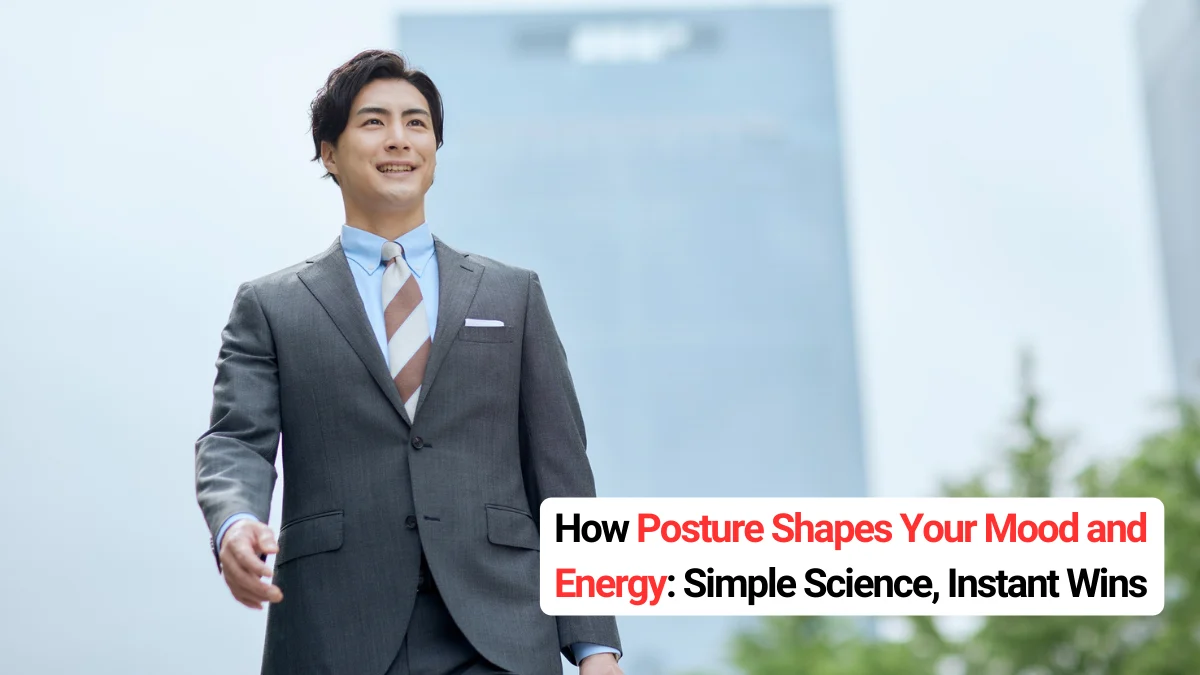
The way you sit or stand does more than protect your back. Your posture can shape how you think, how much energy you have, and how quickly your mood shifts. New insights from movement science show that even a small posture change can improve breathing, focus, and confidence.
These effects often appear within a short time and can be easy to apply in daily life.
Key Takeaways On How Posture Shapes Your Mood and Energy
- Upright posture improves breathing and energy
- Balanced muscles reduce tiredness and discomfort
- Open posture increases confidence signals in the brain
- Small posture habits can improve mood quickly
- Poor posture increases stress responses over time
Why Posture Influences How You Feel
Posture affects several systems in your body. When these systems work better, you feel more alert and more stable throughout the day. Here are the main reasons posture shapes mood and energy.
Breathing and Oxygen Flow
When the body slouches, the chest becomes narrow. This limits lung expansion and creates shallow breathing. When you sit or stand tall, the chest stays open. Better breathing increases oxygen levels, which supports higher energy and clearer thinking.
Muscle Load and Fatigue
Poor posture forces some muscles to take more load and leaves others underused. This imbalance creates fatigue and soreness. When posture is aligned, the work is shared more evenly. The body uses less energy to stay upright, so you feel less tired.
Body Language Signals
Your posture sends signals both to your own brain and to people around you. A tall and open posture supports a sense of control. A collapsed posture can strengthen low mood. These signals form a loop between the body and the mind, which can influence confidence and motivation.
Nervous System Activity
The core and postural muscles connect directly with the nervous system. Stronger core support and an upright position can reduce stress signals. This can lead to a calmer state and better emotional stability.
Simple Posture Checks You Can Try
Try this short test to see how posture changes your state.
Slouch for 30 seconds with shallow breathing and notice how your body feels.
Then sit or stand tall for 30 seconds with your shoulders back and your chin level. Take deeper breaths. Most people feel a shift toward calmness and alertness during the second step.
6 Posture Habits That Support Mood and Energy
Here is one listicle as required:
- Reset every hour. Stand, stretch, or walk for a short time to prevent stiffness.
- Keep chest open and chin level. Imagine lifting the top of your head upward.
- Ground your feet. When sitting, keep both feet flat with knees at a right angle.
- Move your shoulders. Do gentle shoulder rolls to release tension.
- Build core strength. Simple work like planks or bridges makes posture easier to hold.
- Hold your phone at eye level. Reduce the strain that comes from bending your neck.
A Short Guide: What Helps vs What to Avoid
| Do (quick fix) | Avoid (common trap) |
|---|---|
| Sit with back supported, feet flat | Sitting with legs crossed and leaning forward |
| Take short movement breaks every hour | Long periods of still sitting |
| Lift phone to eye height | Looking down at the phone for long durations |
| Light core exercises a few times a week | Depending only on soft lounge seating |
When Posture Is Not Enough
Posture brings helpful benefits but does not solve every issue. If you face ongoing low mood, extreme tiredness, or long lasting pain, you should seek advice from a doctor or a mental health professional. Posture supports overall wellness but is not a full treatment on its own.
A Simple Two Minute Energy Routine
Sit tall and roll your shoulders back. Keep the core slightly engaged.
Breathe in for 4 counts, hold for 2, then breathe out for 6. Repeat this four times.
Stand up, reach your arms overhead, stretch, and shake your hands.
Doing this mid afternoon can improve focus and reduce the feeling of heaviness.
Why This Matters Every Day
Most people spend long hours sitting at desks, on phones, or in cars. Small posture adjustments are easy to use and cost nothing. These changes can improve energy, reduce discomfort, and support better mood throughout the day. Over time, good posture creates smoother movement and lowers the risk of common aches.
Final Note
Think of posture as a daily habit that builds gradually. Short resets, small stretches, and a little core work are enough to create clear benefits. Good posture supports how you feel and how you move. Take one minute now to stand tall, breathe deeper, and notice how this small act shifts your energy.