A healthy body does not always come from heavy weights or advanced machines. Many people see clear improvements when they learn how the body is designed to move in daily life.
This idea is known as functional movement, and it helps build strength, energy, and smooth movement through simple, natural patterns. When you train these patterns with the right approach, everyday tasks start feeling easier and more controlled.
Key Takeaways On Functional Movement
- Functional movement trains natural patterns used in daily life
- It improves posture, balance, and joint strength
- It reduces the risk of common injuries
- It supports mobility for people of all ages
- Simple bodyweight training is enough to begin

What Is Functional Movement
Functional movement refers to the basic actions the body performs through the day. These include squatting, pushing, pulling, lunging, rotating, and walking. They form the base of physical activity. When these patterns are trained well, the body becomes strong, stable, and flexible. It also reduces the stress placed on joints and muscles.
These movements are considered the core of daily function. Training them helps you move in a more natural and efficient way.
Why Functional Movement Matters
Modern lifestyles involve long hours of sitting, less walking, and limited activity. This leads to weaker muscles, stiff joints, and low mobility. Over time, this raises the chance of pain and injuries.
Functional training helps fix these issues by improving strength for daily work, increasing balance, supporting posture, and improving body coordination. It also boosts joint health and general energy. Experts agree that functional movement supports people at all ages and fitness levels.

Seven Core Functional Movements to Train
Here are the seven patterns the body relies on daily. Training them builds a base that makes movement smoother and reduces strain.
1. Squat: Sit and Stand Pattern
The squat trains your ability to sit and stand with control. It strengthens the legs, hips, and core.
Daily use: getting up from a chair, lifting items from the floor.
2. Hinge: Hip Bending Pattern
This movement helps you bend without stressing your back.
Main muscles: hamstrings, glutes, lower back.
Daily use: lifting bags, tying shoes.
3. Push: Moving Weight Away
This includes pushing forward or overhead.
Daily use: opening doors, placing items on shelves.
4. Pull: Bringing Weight Toward You
Strong pulling strength supports posture and back health.
Daily use: pulling drawers, lifting a child, carrying objects.
5. Lunge: Controlled Step and Lowering
Lunges build stability and leg strength.
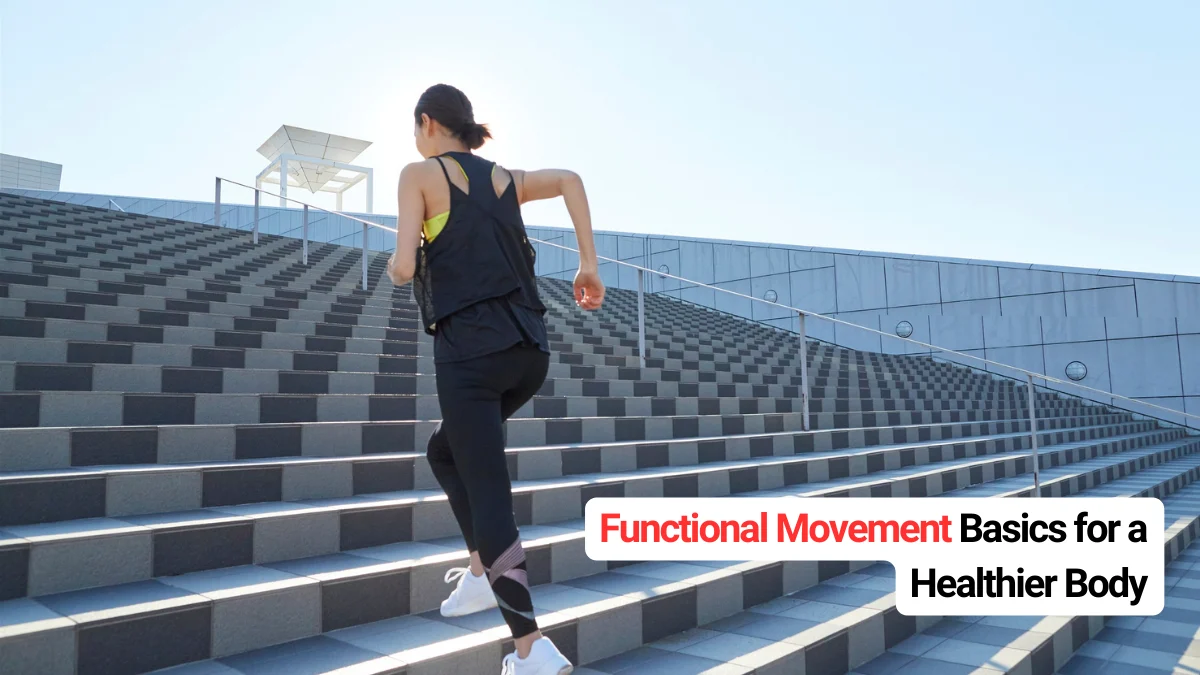
Daily use: climbing stairs, stepping out of vehicles.
6. Rotation: Turning Movements
Rotational strength protects the spine and improves core control.
Daily use: reaching behind you, turning while walking.
7. Gait: Walking or Running
This is the most basic movement but also one of the most important.
Walking supports heart health, joint strength, balance, and general mobility.
| Movement | What It Trains | Daily Life Use |
|---|---|---|
| Squat | Legs and core | Sitting, standing |
| Hinge | Back and hips | Picking things up |
| Push | Chest and shoulders | Pushing doors, lifting |
| Pull | Back and arms | Carrying bags, pulling objects |
| Lunge | Legs and balance | Stair climbing |
| Rotation | Core and spine | Reaching, twisting |
| Gait | Full body | Walking, running |
Why Functional Movement Supports Long-Term Health
With age, muscles weaken, mobility drops, and balance becomes less stable. Functional training helps slow these changes. It improves joint strength, supports bone health, enhances reflexes, and prevents avoidable injuries. Many coaches consider these exercises as some of the strongest tools for maintaining youth and physical ability through the years.
How to Start Functional Movement Training
A gym is not required to begin. These steps are enough for most people:
Start With Bodyweight
Practice basic movements without resistance to learn proper form.
Focus on Form
Controlled movement teaches your muscles the correct pattern.
Add Light Resistance
Use bands, light dumbbells, or simple household items when ready.
Train Three to Four Days a Week
Steady practice creates better progress than intense short bursts.
Listen to Your Body
Avoid any movement that causes sharp pain. Adjust speed or depth if joints feel tight.
Beginner-Friendly Functional Exercises
Here are exercises that help build a strong base without placing too much load on the body.
- Bodyweight squats
- Step ups
- Lunges
- Incline push ups
- Wall sits
- Planks
- Resistance band rows
- Single leg balance stands
These movements improve stability and strength while staying beginner friendly.
Final Thoughts
Functional movement is more than a fitness plan. It is a simple and effective way to keep the body strong for daily life. By training the movements you use every day, you build strength, protect joints, and improve the quality of your movement. You do not need heavy equipment or long sessions. You only need consistent practice with natural patterns that support a healthier body.
Anyone who wants to stay active and pain free can benefit from functional movement. It offers a clear path to better mobility, strength, and confidence.