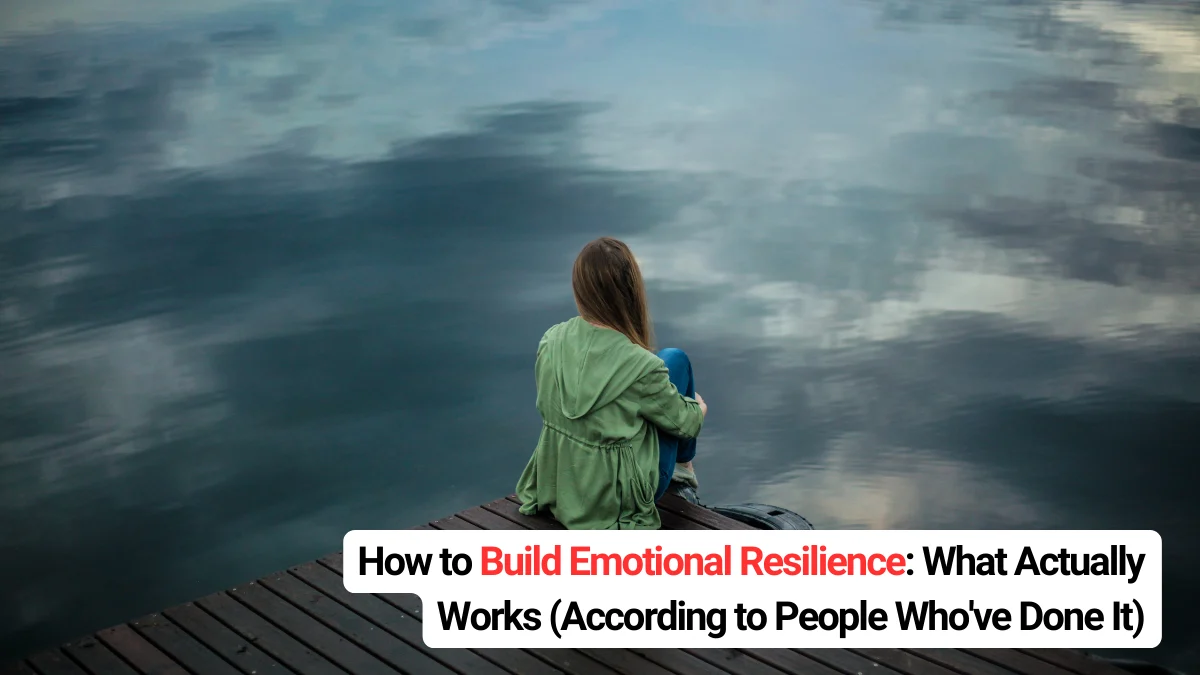
If you’ve been feeling everything a little too deeply lately, you’re not alone. After the chaos of global news cycles, widespread layoffs, and endless social media notifications, more people than ever are searching for ways to build emotional resilience.
But here’s the thing the old advice of “just push through it” isn’t cutting it anymore. The conversation around resilience has completely shifted in 2025, and what people are actually doing to bounce back might surprise you.
What Emotional Resilience Really Means Now
Forget the outdated idea that resilience means toughening up and ignoring your feelings. Today’s approach is totally different.
Resilience isn’t about never feeling bad it’s about feeling bad and still being able to function. It’s not armor you build to block emotions. Think of it more like training your nervous system to handle stress without completely falling apart.
As one viral post put it: “Your nervous system keeps the score, not your affirmations.”

The Body-First Approach That’s Going Viral
Here’s what thousands of people are actually doing right now to build resilience (and it’s working):
Quick Daily Practices That Take 60 Seconds or Less
- The Physiological Sigh: Double inhale through your nose, then one long exhale through your mouth. This activates your calming nervous system instantly.
- Name It to Tame It: Simply say out loud what you’re feeling. “I’m anxious about this meeting” actually reduces the emotional intensity.
- 4-4-6 Breathing: Breathe in for 4 counts, hold for 4, exhale for 6. The longer exhale signals safety to your brain.
- Future Self Journaling: Write a short letter to yourself from your calmer, wiser future self. What would they tell you right now?
What’s Different About 2025’s Resilience Movement
The biggest shift? People are rejecting “toxic resilience” the idea that you should just grind harder and ignore your feelings.
Instead, the most popular advice right now focuses on:
Rest as resilience → Taking breaks isn’t weakness; it’s strategic recovery.
Saying no as resilience → Protecting your energy is a survival skill.
Body-based practices → Cold showers, breathwork, and vagus nerve exercises are getting more attention than positive thinking.
Community over isolation → You don’t build resilience alone in a room. You build it with safe people who get it.
The Framework People Are Actually Using
One of the most shared approaches in 2025 is “The 4 S’s”:
| Step | What It Means |
|---|---|
| See It | Notice what you’re feeling without judgment |
| Soothe It | Use breathwork, movement, or touch to calm your nervous system |
| Shift It | Gently change your perspective or environment |
| Sustain It | Build tiny daily habits that keep you regulated |
Why This Matters Right Now
After the 2025 tech layoffs and ongoing global uncertainty, emotional resilience isn’t just a nice-to-have it’s essential. The people bouncing back fastest aren’t the ones pretending everything’s fine. They’re the ones who learned to feel their feelings AND take action anyway.
One ex-tech worker who got laid off in early 2025 shared: “Radical acceptance plus skill stacking saved me. I stopped fighting reality and started building what’s next.”
Where to Start Today
Don’t try to overhaul your entire life. Pick one micro-habit:
- Try the double-inhale exhale technique next time you feel overwhelmed
- Label one emotion out loud when it shows up
- Write down one thing your future self would thank you for doing today
The goal isn’t to never struggle. It’s to learn how to hold space for hard feelings without letting them run your life.
Because at the end of the day, emotional resilience isn’t about being unbreakable. It’s about knowing you can bend without breaking and that’s a skill you can actually build.