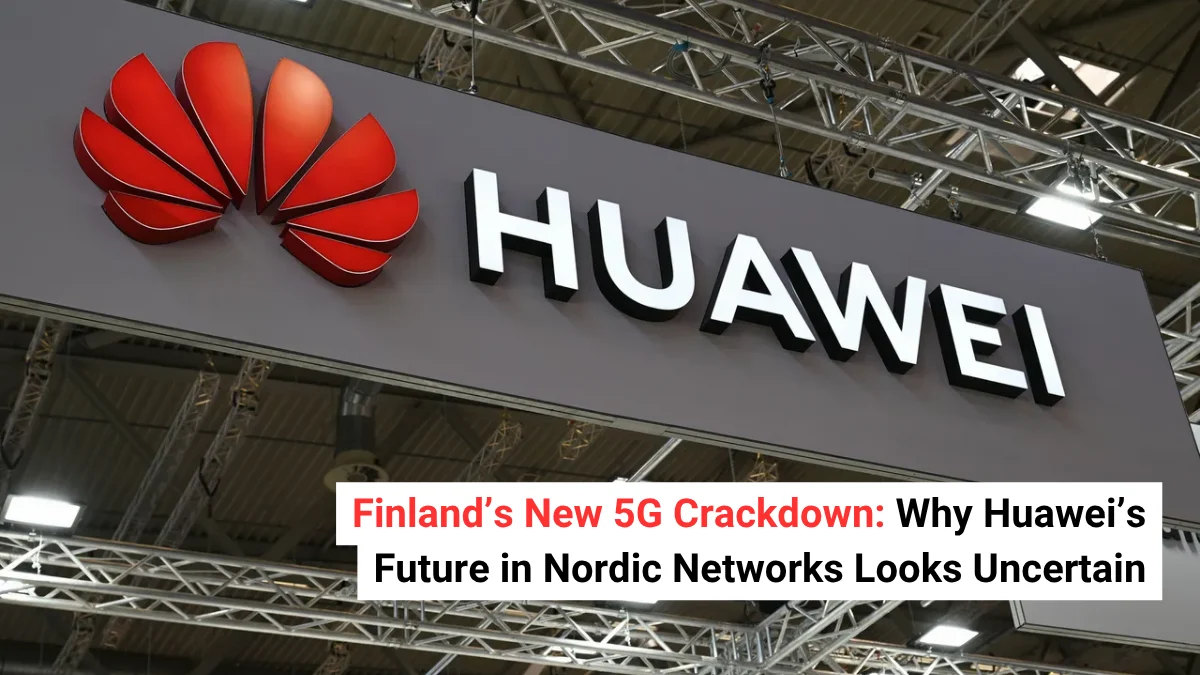
Finland 5g ban update: Think Of building one of the fastest internet systems in the world, only to worry it might be vulnerable to spying. That’s the concern now facing Finland’s tech industry.
On October 31, 2025, Bloomberg reported that Finland is preparing new rules targeting “high-risk” 5G equipment from companies such as Huawei and ZTE. It’s not a total shutdown of 5G, but it’s a strong step toward prioritizing national security over technology speed.
Key Takeaways On Finland’s New 5G Crackdown
- Critics warn it might increase costs for operators and customers.
- Finland plans new restrictions on high-risk 5G suppliers, likely affecting Huawei and ZTE.
- The draft rules aim to extend existing bans to base stations and other key network functions.
- This aligns Finland with the EU’s broader 5G security framework, known as the “5G Toolbox.”
- The move could boost Nokia’s market position at home and across Europe.

From Innovation to Inspection
Finland, home to telecom giant Nokia, was among the first to launch ultra-fast 5G networks. Since 2021, however, security concerns have grown.
Huawei was already excluded from Finland’s core network components, considered the “brain” of the system. Now, Traficom, the country’s transport and communications authority, wants to expand these limits to include base stations and additional infrastructure.
The new draft doesn’t name any company directly, but analysts point clearly to Chinese vendors viewed as espionage risks. The concern is magnified by Finland’s new NATO membership and its proximity to Russia. In simple terms, Finland wants to tighten its digital borders before threats grow larger.
A Broader European Push
This move fits into a wider European effort for safer telecom networks. The EU’s 2020 “5G Toolbox” urged member states to reduce dependency on suppliers considered risky.
So far, only 11 out of 27 countries have adopted strict rules. Sweden has a full ban, and Germany plans to remove core components by 2026. Finland’s draft aligns with this cautious but steady shift toward what some call a “telecom fortress.”
For everyday users, this means stronger data protection and fewer fears about network surveillance. For telecom operators, it could mean higher upgrade costs and delays in rollout, as replacing Huawei or ZTE equipment won’t be cheap or quick.

What the Public Thinks On Finland’s New 5G Crackdown
Following Bloomberg’s report, discussions on X exploded. Activity jumped 70% in a single day as analysts, journalists, and citizens reacted.
Here’s how users responded:
| Sentiment | Public Reaction | Engagement |
|---|---|---|
| Pro-Security (65%) | Applauding Finland’s decision as “mature” and “necessary.” Many linked it to NATO alignment. | 700–900 likes on top posts |
| Skeptical (25%) | Critics accused the EU of hypocrisy supporting open markets while imposing tech bans. | 200–400 likes |
| Neutral Reporting (5%) | Outlets like Iltalehti and Bloomberg simply shared the facts. | 18K+ views |
| Fringe Myths (5%) | Small groups revived old 5G health conspiracies, quickly debunked. | Limited traction |
Overall, the sentiment leaned practical: security over cheap imports. Searches for “EU 5G Huawei ban” rose 40% last week, showing public curiosity across the region.
What Comes Next
For users, 5G will likely become more secure and reliable. For governments, this is another sign that technology and geopolitics are now inseparable.
Huawei has yet to comment, but resistance to “unfair labeling” is expected. The main question is whether these changes will inspire a full EU ban or stay limited to national decisions.
Traficom’s draft is now open for public feedback, with the final version expected later this year. Whatever the outcome, Finland’s stance shows a clear trend: in the new digital era, trust matters more than speed.