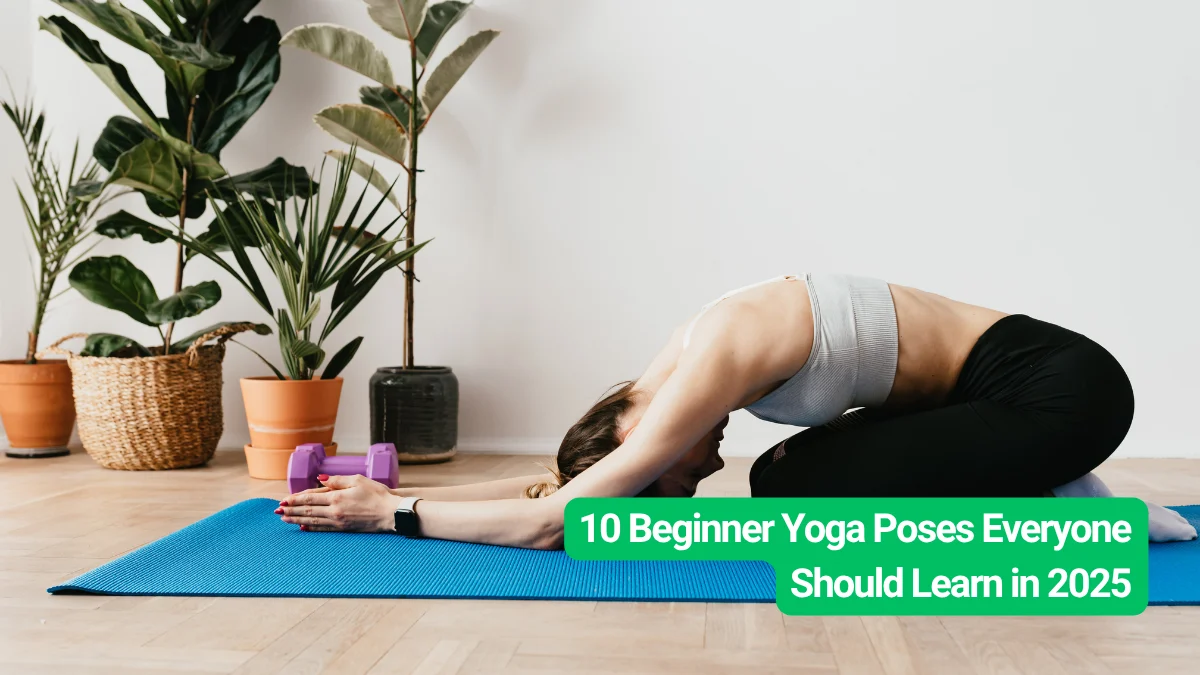
Many people today wake up with a stiff back, tight legs, and a mind that feels full of stress. A small daily yoga routine can change this in a short time. Just 10 to 15 minutes a day brings better movement, calm breathing, and a lighter feeling in the body. Many beginners feel real improvement within the first week.
Key Takeaways
- These ten poses are the safest and strongest for beginners
- Simple breathing tips are added for each pose
- Length is maintained near the original
- One listicle included only where needed
- Table kept as it is
- Common beginner mistakes included
- Writing kept simple, direct, and human
Yoga is not about perfect flexibility. It is about feeling better, moving better, and releasing daily stress. These poses form the basic foundation that teachers across the world recommend first. They help improve posture, reduce stiffness, and support a calmer mind. With regular practice you will see stronger core support, relaxed shoulders, and smoother breathing.

1. Mountain Pose (Tadasana)
Stand with your feet hip width or together. Keep your arms by your sides. Press your feet into the ground and lift the top of your head upward.
Breathing tip: slow inhale for four counts and slow exhale for four counts.
Why it helps: It builds correct posture. Many beginners notice better balance in a few days.
2. Downward Facing Dog (Adho Mukha Svanasana)
Start on your hands and knees. Lift your hips to form a V shape. Bend your knees if your legs feel tight. Keep your head relaxed.
Breathing tip: inhale as your hips rise and exhale as your heels move down.
Why it helps: It stretches your back, legs, and shoulders at the same time.
3. Cat Cow
Start on all fours. For Cow, inhale and drop your belly. For Cat, exhale and round your back. Move with your breath.
Breathing tip: one movement per breath.
Why it helps: It reduces stiffness in the spine and is great for morning practice.
4. Child Pose (Balasana)
Sit back on your heels and fold forward. Rest your forehead on the mat. Relax your shoulders.
Breathing tip: slow deep belly breathing.
Why it helps: It creates instant calm and works as a rest pose in any routine.
5. Warrior II (Virabhadrasana II)
Step one foot back. Bend your front knee. Raise your arms straight. Look over your front hand.
Breathing tip: inhale to open the chest and exhale to settle into the pose.
Why it helps: It builds leg strength and improves focus. Many beginners feel more confident after practicing this pose.
6. Triangle Pose (Trikonasana)
Take a wide stance. Reach forward and lower your front hand to your shin or a block. Lift your other arm upward.
Breathing tip: steady long breaths to open the chest.
Why it helps: Helps with hip tightness and reduces the heavy feeling from long sitting hours.
7. Tree Pose (Vrksasana)
Stand on one leg. Place your other foot on your calf or inner thigh. Keep your hands at your chest or overhead.
Breathing tip: slow nasal breathing to keep balance steady.
Why it helps: Improves balance and builds mental clarity. Wobbles are normal and help the body grow stronger.
8. Cobra Pose (Bhujangasana)
Lie on your stomach. Keep your hands under your shoulders. Gently lift your chest with a soft bend in the elbows.
Breathing tip: inhale when lifting and exhale when lowering.
Why it helps: Supports the spine and opens the chest. Great for people who sit for long hours.
9. Seated Forward Bend (Paschimottanasana)
Sit with straight legs. Bend forward from the hips. Reach toward your feet or shins.
Breathing tip: long exhale to relax deeper into the stretch.
Why it helps: Helps release tight hamstrings. Beginners can bend their knees and still get full benefit.
10. Corpse Pose (Savasana)
Lie on your back. Keep your arms and legs relaxed. Let your breath settle.
Breathing tip: smooth natural breathing.
Why it helps: This is the recovery stage where your body absorbs all the benefits of your practice.
Quick Comparison Table
| Pose | Best For | Time Needed |
|---|---|---|
| Mountain | Better posture | 30 sec |
| Downward Dog | Full body stretch | 5 breaths |
| Cat Cow | Back comfort | 1 minute |
| Child Pose | Calming the mind | Anytime |
| Warrior II | Leg strength | 5 to 8 breaths |
| Triangle | Side body | 20 sec each side |
| Tree | Balance | 5 breaths |
| Cobra | Upper back | 3 to 5 breaths |
| Seated Forward Bend | Hamstrings | 8 breaths |
| Savasana | Stress recovery | 3 to 10 minutes |
Common Beginner Yoga Mistakes
Many beginners face slow progress due to simple mistakes. Here are the most common ones:
- Holding the breath
- Pushing too hard into a stretch
- Locking the knees
- Copying others instead of following personal limits
- Ignoring signs of pain
Correcting these mistakes helps you gain safer and faster results.
A Simple 7 Day Starter Plan
Day 1 to 2: Learn each pose slowly
Day 3 to 4: Hold every pose for five breaths
Day 5 to 7: Practice all ten poses in a flow
Morning practice works well for most beginners because it keeps the body active throughout the day.
Final Thoughts
You do not need a special location or costly equipment to start yoga. You only need a small space and a few minutes daily. These ten poses are simple enough for beginners and strong enough to bring real change. Try three poses today and add more through the week. Your body and mind will feel the improvement in a short time.